English| EUR
Suggested for you
More currencies
Choose a language
Wine tasting is a structured sensory evaluation that reveals everything from a wine's age to its terroir. In Riomaggiore, where Cinque Terre DOC and Sciacchetrà are produced on some of Europe's steepest coastal slopes, understanding the five-step method turns a casual glass into a full reading of the landscape.
Quick answer
The 5 steps of wine tasting are: see (observe color and clarity), swirl (release aromatic compounds), smell (identify primary aromas), taste (evaluate flavor, body, and structure), and savor (assess the finish and aftertaste). Each step builds on the last, guiding you from visual analysis through aromatic complexity to the wine's texture and lingering notes—a sequence that applies whether you're sampling Vermentino at a cliffside cantina or aged Sciacchetrà in a village enoteca.
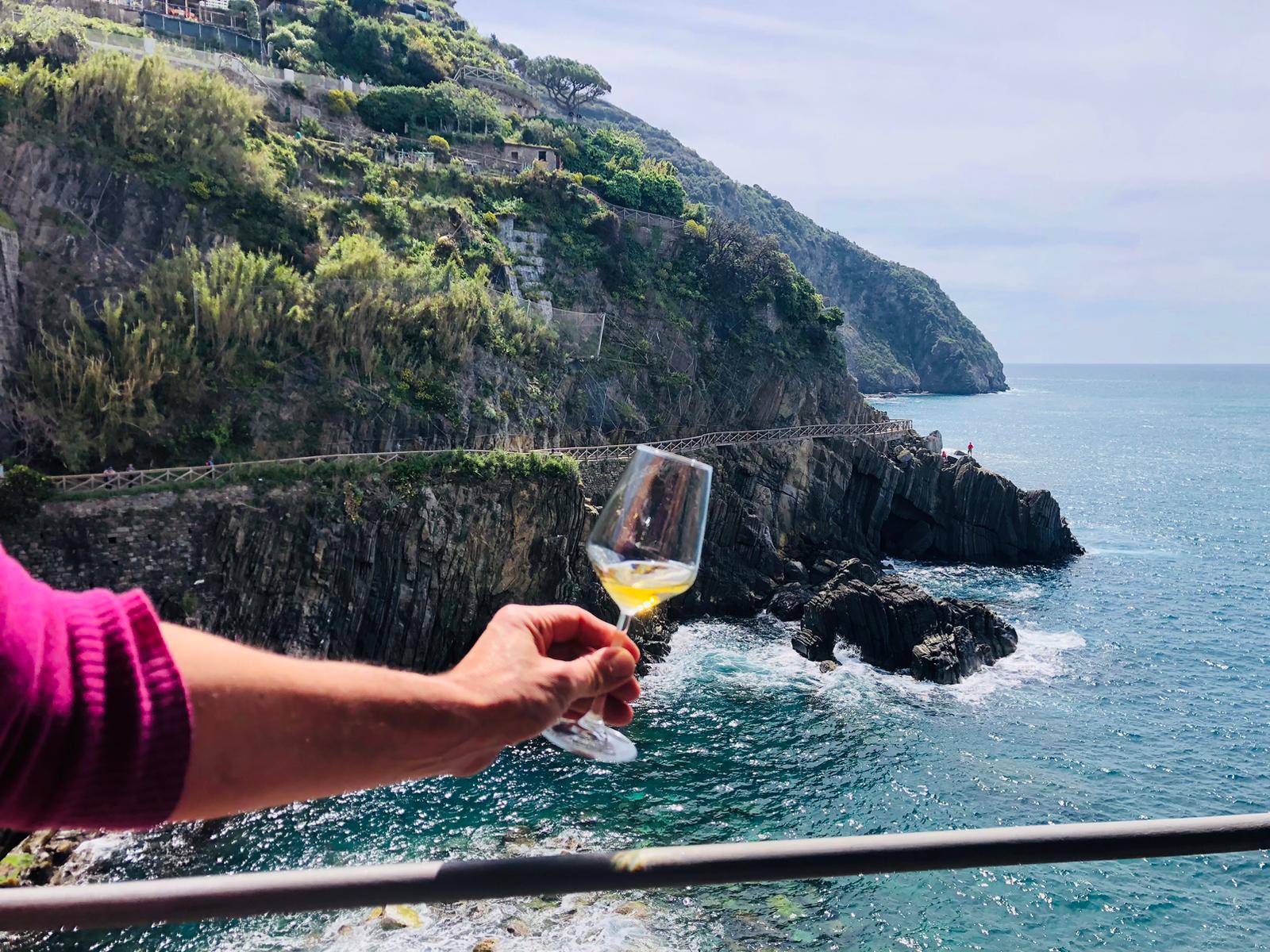
Riomaggiore's winemaking tradition spans more than a millennium, yet the village has no commercial tasting room by that exact name—wine encounters here unfold in family-run cantinas, cooperative cellars, and outdoor terraces where the vines cascade down to the Ligurian Sea. The 5 steps of wine tasting remain constant across every setting: a formal framework that sommeliers, winemakers, and serious drinkers use to decode what's in the glass. The first step—observation—asks you to hold the glass against a white background and note the wine's hue, intensity, and clarity. A pale straw yellow signals young Vermentino; deep amber suggests oxidative aging in Sciacchetrà. Swirling comes next, aerating the liquid to volatilize esters and phenolic compounds. Then you inhale: primary aromas (fruit, flowers) emerge first, followed by secondary notes from fermentation and tertiary layers from barrel or bottle age. The fourth step—tasting—maps acidity, tannin, alcohol, and body across your palate, revealing balance or imbalance. The fifth step, often called the finish or aftertaste, measures how long those flavors persist after you swallow. In Riomaggiore, this sensory evaluation takes on specific meaning. Cinque Terre DOC whites are known for saline minerality—a reflection of sea spray and schist soils—while Sciacchetrà, a passito dessert wine, layers dried apricot, honey, and oxidative walnut notes that linger for thirty seconds or more. Practicing the wine tasting method here means learning to taste terroir: the iodine edge that comes from maritime exposure, the citrus brightness born of high UV at altitude, the phenolic grip left by hand-harvested Bosco and Albarola grapes. Most tastings in the village happen by appointment at cooperative wineries or small producers who farm the UNESCO-protected terraces. Visitors are welcome to request a guided session where each of the five steps is demonstrated with local varietals, often accompanied by focaccia or anchovies to reset the palate between pours. The experience is instructional rather than commercial: you're learning a skill, not selecting a product tier.
“Each step builds sensory information into a complete profile of the wine's origin, age, and structure.”
Mastering the traditional tasting sequence allows you to properly evaluate the minerality and acidity characteristic of Cinque Terre wines. This standard evaluation process takes about two to three minutes per glass from the initial pour to the final finish.
Hold your glass by the stem against a white surface to evaluate the pale straw hue of local white blends. The common mistake is holding the glass up to the direct sun, which completely distorts the wine's actual color.
Keep the base of the glass on the table and gently draw small circles to release the aromas. Many visitors hold the bowl while swirling, transferring body heat that prematurely warms these crisp coastal wines.
Hover your nose just inside the rim of the glass and take a short, deliberate sniff to detect Mediterranean herbs and citrus. People often hold the glass too far from their face, entirely missing the subtle saline notes.
Take a small measure of wine and hold it in your mouth for three seconds, letting it touch every part of your tongue. The standard error is swallowing it immediately like water, which bypasses the wine's structured minerality.
Swallow the wine and slowly exhale through your nose to evaluate how long the flavor remains on your palate. Tasting participants frequently rush straight into a second sip rather than pausing to register the characteristic dry, almond finish.
As the 5 steps of wine tasting is an informational concept regarding regional viticulture rather than a physical venue in Riomaggiore, there are no operating hours.
Everything you need to know about 5 steps of wine tasting
There is no physical attraction or official venue dedicated to a 5 steps of wine tasting in Riomaggiore. The town is famous for its terraced vineyards and local Sciacchetrà wine, but this specific sequence is not a hosted event.
While you may find local vintners or private experiences, there is no organized excursion for the 5 steps of wine tasting currently operating as a public attraction. Visitors are encouraged to explore regional enotecas to sample local vintages independently.
The entrance fee for this specific activity is 0 EUR because no physical attraction by this name exists in Riomaggiore. You will not find ticket offices or entry requirements for this term.
The attraction does not exist, so there are no opening hours for the 5 steps of wine tasting. Local establishments offering wine service operate on their own independent schedules.
Since this is not a real venue, there are no age restrictions or facilities for minors. Please check individual local wineries if you are seeking family-friendly options in the Liguria region.
The best arrival window is 00:00–00:00 as the attraction does not exist. Please plan your visit around established local wine bars or vineyard tours instead.
No reservations are possible because the attraction does not exist. You are free to enjoy the viticulture of the Cinque Terre by visiting independent wine producers or local bars that feature regional terroir and cellar techniques.